Tsume Shogi: Checkmate Puzzles That Make You Better
Tsume shogi are checkmate puzzles: composed positions where the attacker must checkmate the enemy king through an unbroken sequence of checks, while the defender resists as long as possible. Every attacking move must be check. Solving tsume is widely considered the single fastest training method in shogi.
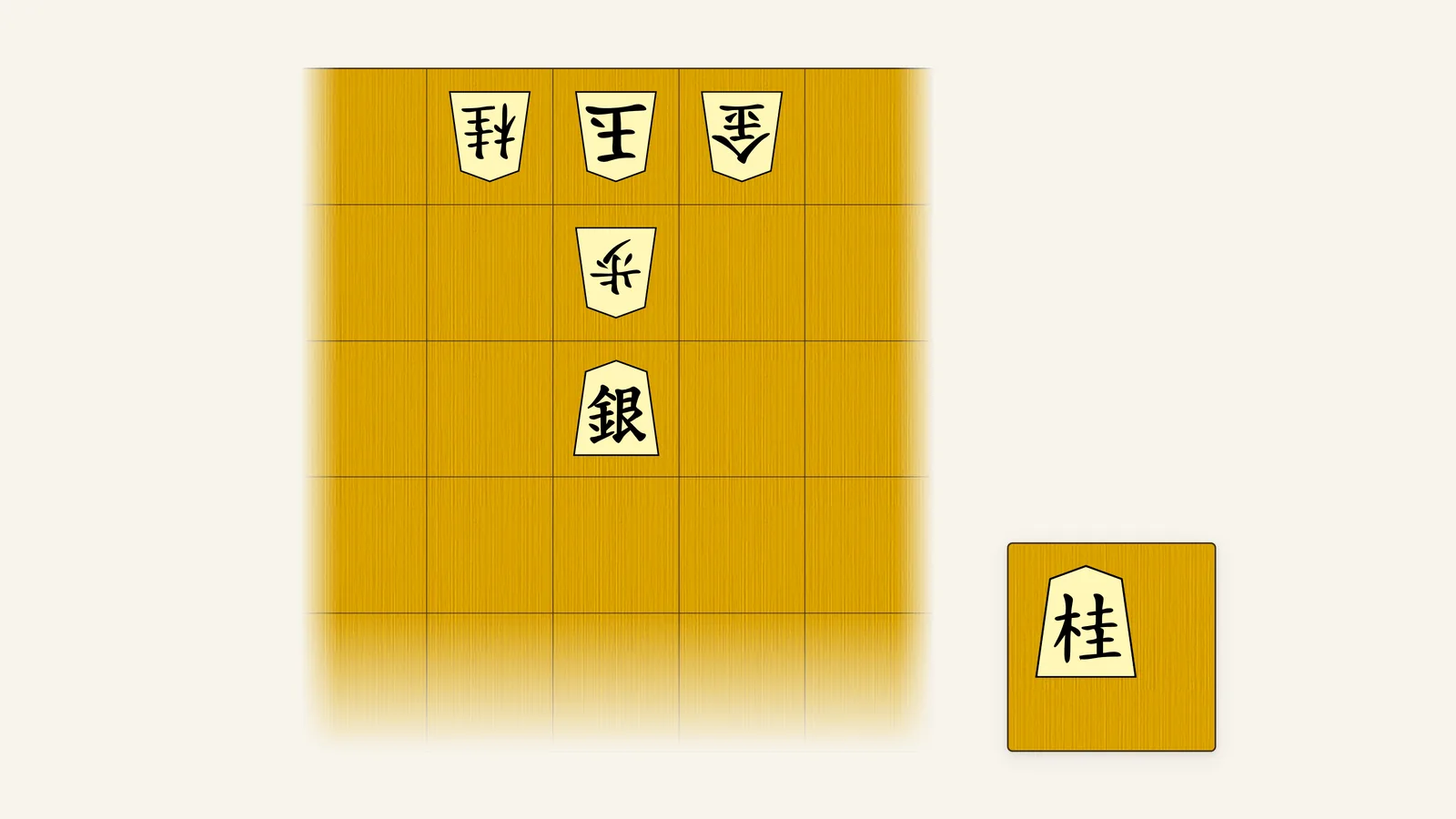
What a tsume problem is
A tsume position shows you a corner of a board: the defending king, some defenders, your attacking pieces, and, crucially, the pieces in your hand. Your task is to force mate. The rules of the puzzle are stricter than the rules of the game, and the strictness is the point:
- Every move you make must give check. No quiet moves, no threats, no repositioning. Check, check, check, mate.
- The defender plays the best defense, meaning the one that survives longest, using drops from a hand that contains every piece not otherwise accounted for in the position.
- Pointless defensive drops don’t count. A defender’s interposition that changes nothing (you capture it and mate the same way) isn’t a real defense; solutions ignore them.
- The solution length is fixed. A “3-move tsume” mates in exactly three moves of alternating play (your move, their best answer, your mate). Problems come in odd lengths: 1, 3, 5, 7, and upward into the hundreds for composed showpieces.
All the normal rules of shogi still apply inside a puzzle, including the sneaky ones: no pawn-drop mate, promotion choices, the works. Composers exploit exactly those corners, which is one reason tsume teaches rules-mastery for free.
Why every move must check
The convention looks artificial until you see what it trains. Real shogi endgames are races; while you attack their king, they’re attacking yours (the drop rule guarantees the ammunition). In a race, a mating attack that pauses for one non-checking move hands the opponent a move to mate you first. The endgame skill that wins shogi games isn’t “attack the king,” it’s “count whether my forced sequence lands before theirs,” and forced sequences are made of checks.
Tsume is that skill in pure form. Solve enough of them and something shifts: you stop seeing enemy kings as pieces and start seeing them as puzzles with a move count attached. Speed matters, not material; the tsume mindset is why strong players cheerfully dump rooks to shave one move off a mate.
Why it’s the fastest way to improve
A confession on behalf of all board games: beginners are told to study lots of things, and most of it is postponable. Openings? A consistent castle covers you for months (see castles). Strategy? It emerges. But checkmate patterns are not postponable, because every single game you play ends in one, delivered or received, and each pattern you own is a game you stop losing.
Tsume compresses the learning brutally well. A game gives you one endgame per twenty minutes; a puzzle session gives you thirty. The patterns repeat, gold-in-front-of-the-king, the knight check that can’t be blocked, the lance from a distance, the sacrifice that strips a castle’s wall, until you recognize rather than calculate them. Many of these moves have names; our tesuji guide lists the common ones. Professional players solved thousands of these as children, and solving a few daily remains standard training advice at every level in Japan.
A practical plan for a beginner:
- Solve one-move tsume until they feel insulting. This takes days, not months.
- Move to three-move problems until those flow.
- Then step up to five.
Rushing to long problems teaches frustration, not mating nets.
Solving on this site
Our puzzles hub has graded sets of one-move and three-move problems, playable directly on the board: you move, the defense answers with best play, and wrong tries tell you why they fail rather than just buzzing. The interactive part matters more than it sounds. On paper, checking your solution against notation is half the work; on a live board, the defender’s best answers come to you, and refuted tries teach immediately.
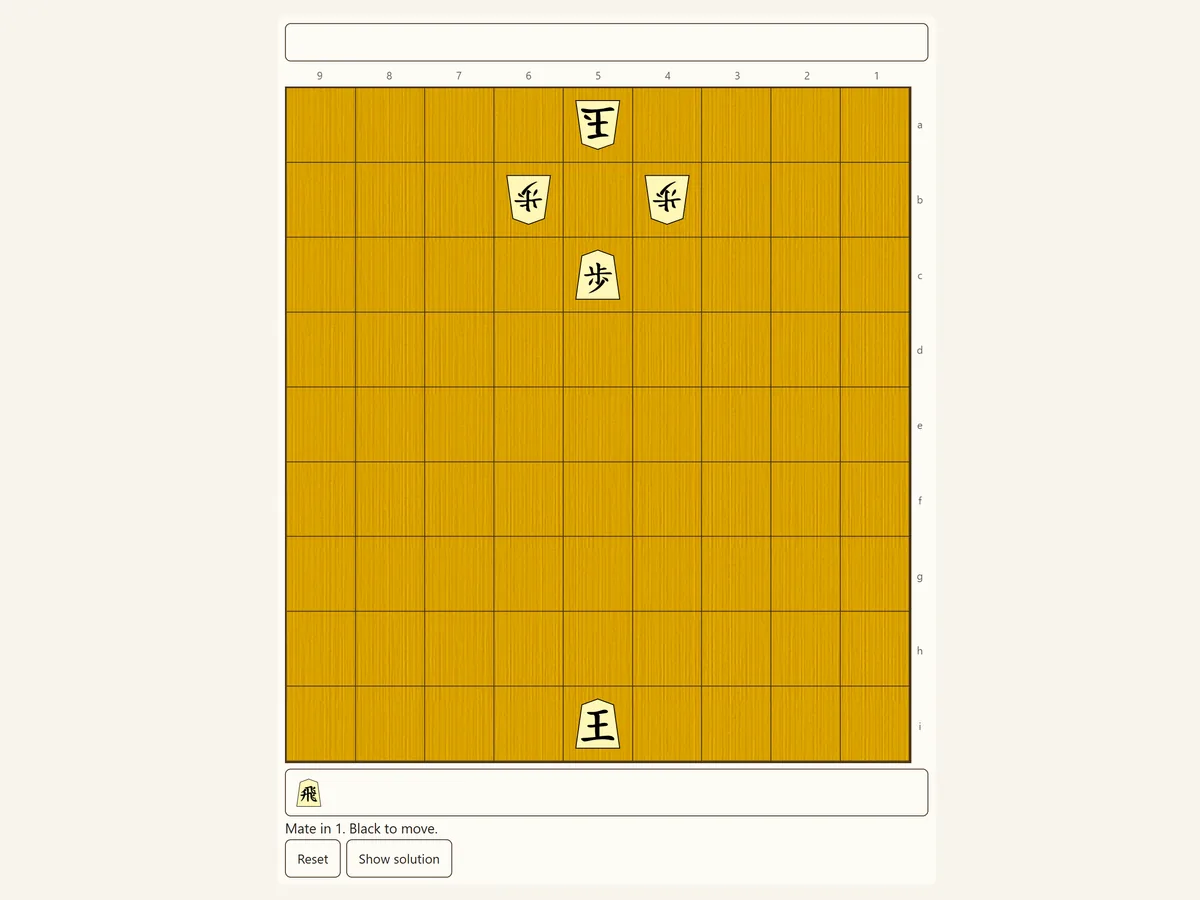
Start at the one-move problems whatever your level; even experienced chess players find their first shogi mates hide in unfamiliar geometry (golds mate differently than queens do, and the drop changes everything). The full range, plus guidance on stepping up in length, is on the puzzles hub. If you met tsume through the Yakuza games, see Yakuza puzzle shogi.
Tsume as an art form
One more thing worth knowing, because it says something lovely about shogi culture: tsume composition is a recognized art, centuries old, with masterpieces and named classics. Composers prize economy (no wasted pieces), surprise (sacrifices of the biggest pieces, promotions declined for exquisite reasons), and depth; celebrated historical collections include problems hundreds of moves long, composed as demonstrations of the form’s limits. Edo-period masters presented problem collections to the shogunate as proof of their school’s skill.
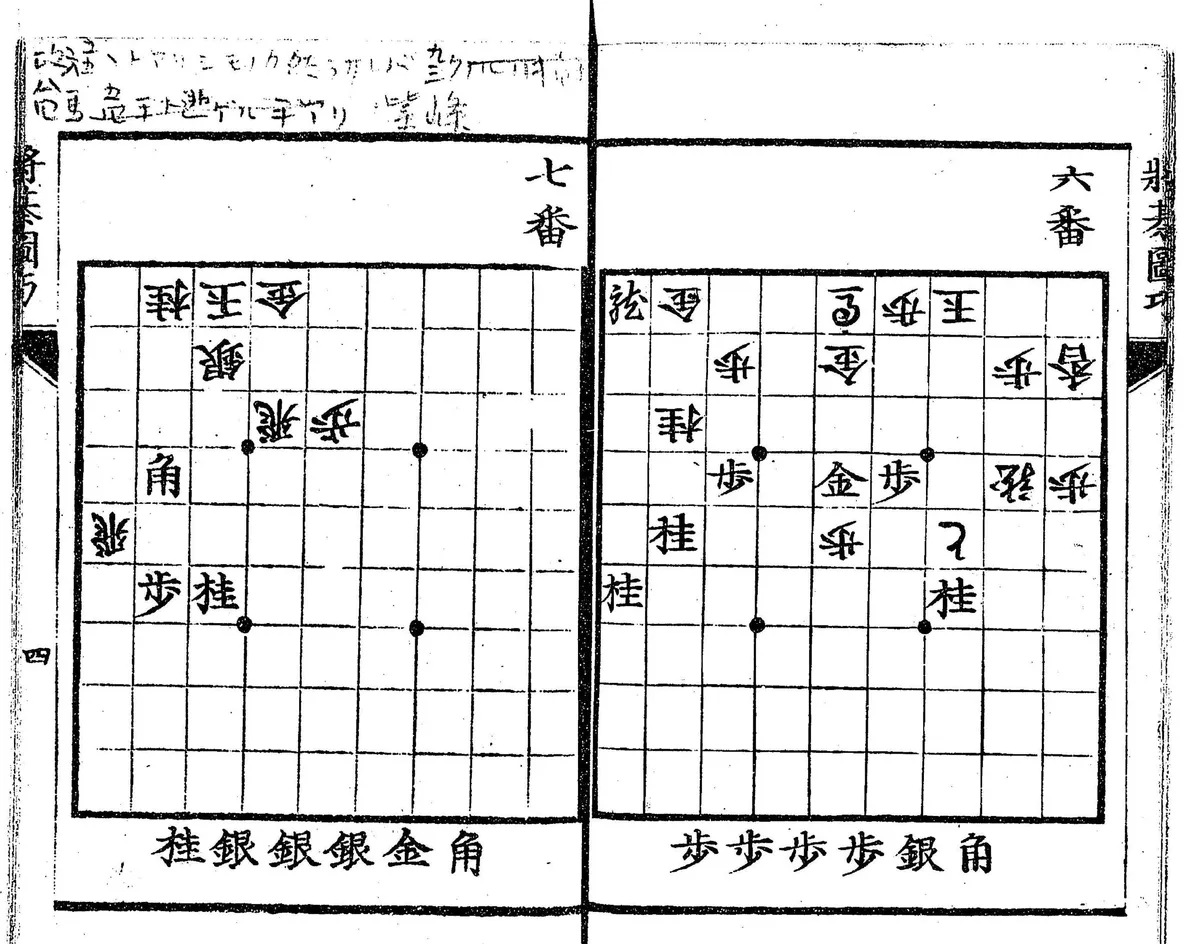
You don’t need any of that to benefit from a daily three-mover. But it’s nice to know that when you solve one, you’re at the shallow end of a very deep, very old pool. Solve your first on the puzzles page, or set up positions from a book on our board’s editor and play them out against the engine.
FAQ
What is tsume shogi?
Tsume shogi are composed checkmate problems: the solver must force mate on the defending king through consecutive checks, against best defense. Every attacking move must be check, the defender holds all unaccounted pieces in hand, and solutions have fixed odd lengths: one move, three, five, and beyond.
What do the moves counts in tsume shogi mean?
The count includes both sides’ moves in the forced sequence. A three-move tsume runs: your check, the defender’s best reply, your mating move. Lengths are always odd because the attacker moves first and last. Beginners should start with one-move problems and graduate upward gradually.
Does tsume shogi actually make you stronger?
Yes, and it’s the most recommended training method in shogi. Every game ends in a mating attack, so mating patterns pay off in every single game, and puzzle sessions deliver dozens of endgame reps per hour. Daily tsume solving is standard advice from beginner level through professional training.
Can every attacking move really be a check?
In tsume, yes, by rule: any solution containing a non-checking attacker’s move is invalid. The convention mirrors real shogi endgames, which are mutual mating races where a single quiet move often means being mated first. Training on all-check sequences builds exactly that racing calculation.
How hard are long tsume problems?
Difficulty scales steeply with length. One-move problems test pattern recognition; three- and five-move problems require reading the defender’s best drops and interpositions; composed problems of 11 moves and up are serious calculation exercises even for strong players, and the historic showpieces run into the hundreds of moves.
Solve the puzzles
Twenty puzzles, each on its own page with an interactive board that answers your tries with best defense. Start with mate in 1.
Mate in 1
Puzzle 1
Mate in 1Gold drop on the head
Puzzle 2
Mate in 1Supported gold advance
Puzzle 3
Mate in 1Dragon head mate
Puzzle 4
Mate in 1Knight drop
Puzzle 5
Mate in 1Back-rank rook drop
Puzzle 6
Mate in 1Silver drop
Puzzle 7
Mate in 1Tokin mate
Puzzle 8
Mate in 1Bishop drop on the long diagonal
Puzzle 9
Mate in 1Horse head mate
Puzzle 10
Mate in 1Gold drop at the side
Mate in 3
Puzzle 1
Mate in 3Rook drop, then gold mate
Puzzle 2
Mate in 3Rook drop on the edge file
Puzzle 3
Mate in 3Rook drop, then silver mate
Puzzle 4
Mate in 3Tokin finish
Puzzle 5
Mate in 3Dragon finish
Puzzle 6
Mate in 3Two-rook ladder
Puzzle 7
Mate in 3Promoted silver finish
Puzzle 8
Mate in 3Edge rook, silver mate
Puzzle 9
Mate in 3Edge rook, dragon mate
Puzzle 10
Mate in 3Edge rook, tokin mate