Tesuji in Shogi: Common Tactics with Names
This page covers tesuji in shogi; Go players use the same word for their own tactics. In shogi, a tesuji is a known, reusable tactical pattern: a short sequence of moves that attacks or defends well in many different positions. Most shogi tesuji involve dropping a piece from your hand onto exactly the right square.
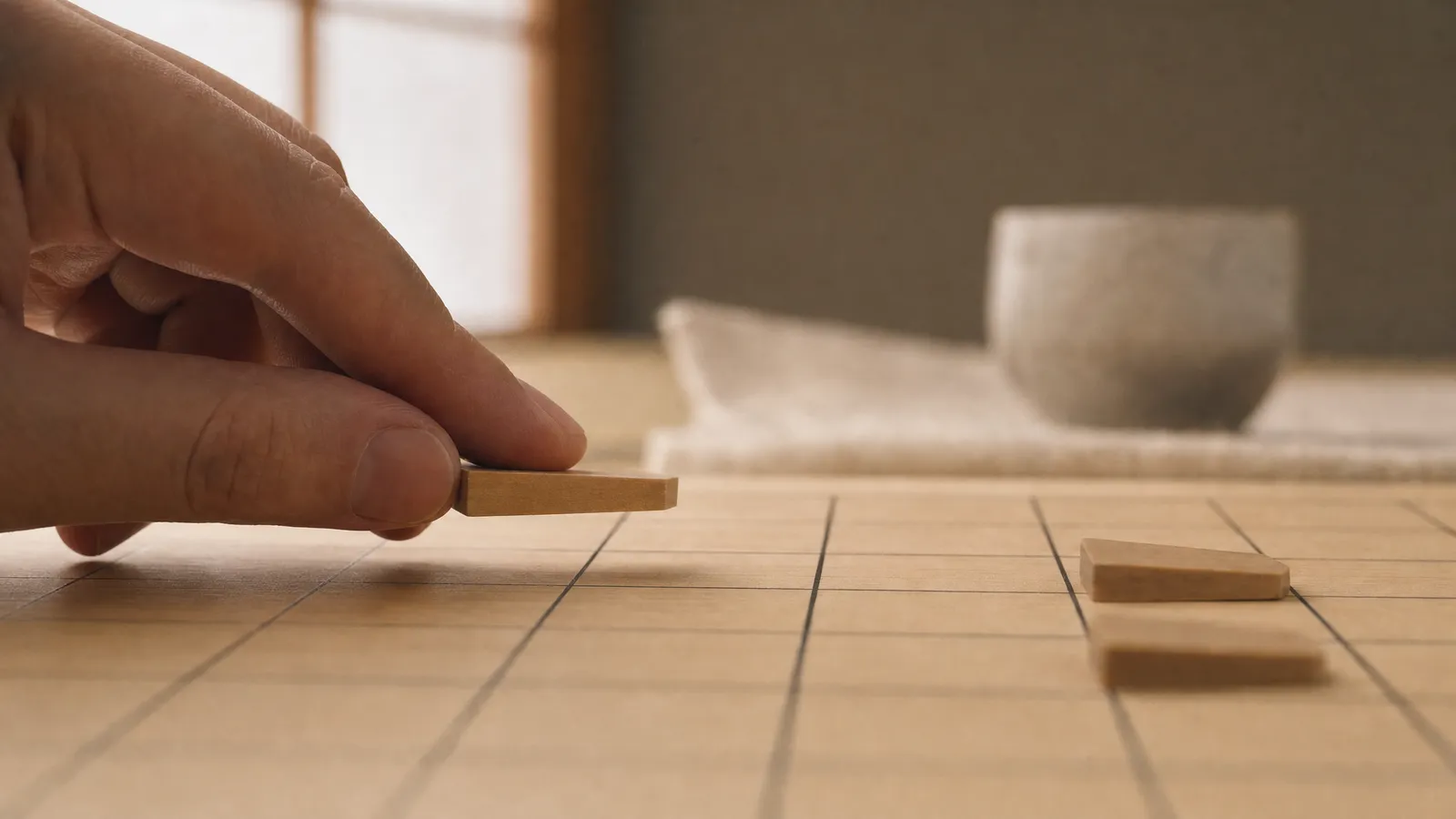
What tesuji means
Tesuji (手筋) joins te, a move, with suji, a line or pattern. Japanese shogi glossaries define it as a patterned local sequence for attack or defense. A plan tells you where to attack; a tesuji is the move that makes the plan work: the pawn strike that opens a file, the knight drop that wins a gold, the gold drop that mates.
Each tesuji has a name, usually built from the piece and what it does. Tataki no fu is “the striking pawn”. Fundoshi no kei is “the loincloth knight”, named after the shape its two attack squares make. Once you know the names, you start seeing the patterns in real games.
| Term | What it covers | Where to learn it |
|---|---|---|
| Tesuji (手筋) | Short tactical patterns that work in many positions | This page |
| Joseki (定跡) | Opening move sequences worked out by professionals | Shogi openings |
| Tsume (詰め) | Forced checkmate sequences | Tsume shogi |
For the bigger picture (castles, piece values, when to attack), start with the shogi strategy guide. This page is the reference list.
Pawn tesuji
Pawns are the cheapest piece in hand, so most tesuji start with one. Losing a pawn to open a file or pull a defender out of place is almost always worth it.
| Name | Japanese | What it does | Typical piece |
|---|---|---|---|
| Tataki no fu (striking pawn) | 叩きの歩 | Drop a pawn directly in front of an enemy piece. It must take or move, and either one pulls it off its good square. | Pawn |
| Tarefu (dangling pawn) | 垂れ歩 | Drop a pawn on the enemy’s second, third or fourth rank, where it can promote to a tokin next move or soon after. | Pawn |
| Tsugifu (follow-up pawn) | 継ぎ歩 | Right after a pawn push or strike is captured, strike again with another pawn on the same file. | Pawn |
| Awase no fu (matching pawn) | 合わせの歩 | Drop a pawn head to head with an enemy pawn to trade it off or block its advance. | Pawn |
| Shoten no fu (focal pawn) | 焦点の歩 | Drop a pawn on a square several enemy pieces guard. Whichever piece captures leaves another square uncovered. | Pawn |
| Sokofu (bottom pawn) | 底歩 | Drop a pawn on your own back rank to block an enemy rook or dragon attacking along it. A classic defense. | Pawn |
| Hikae no fu (waiting pawn) | 控えの歩 | Drop a pawn one square back from the target instead of touching it, so it threatens to advance next move. | Pawn |
The three-pawn proverb. A well-known saying goes: with three pawns in hand, play tsugifu and then tarefu. Strike, strike again, then dangle a pawn behind the defender to make a tokin. It’s a whole attack built from the cheapest piece in the game.
Fork tesuji
A fork (ryotori, 両取り) attacks two pieces at once. Your opponent can save only one. Drops make forks far more common in shogi than in chess, because you can place the forking piece directly.
| Name | Japanese | What it does | Typical piece |
|---|---|---|---|
| Fundoshi no kei (loincloth knight) | ふんどしの桂 | A knight, usually dropped from hand, attacks two pieces that stand on the same rank with one square between them. | Knight |
| Wariuchi no gin (splitting silver) | 割打ちの銀 | A silver dropped so its two rear diagonals hit two pieces at once, typically a rook and a gold one square apart. Often it trades silver for gold and breaks the castle. | Silver |
| Juji bisha (cross rook) | 十字飛車 | The rook attacks one piece along its file and another along its rank. | Rook |
| Ote bisha (check and rook) | 王手飛車 | Check the king and attack the rook with one move, usually with a bishop. The king must escape, so the rook falls. | Bishop |
The knight fork is the first tesuji most players learn. The knight can’t be blocked, it jumps over everything, and both target squares are two ranks ahead. If the enemy gold and silver sit side by side with a gap between them, a knight in hand is a threat.
Line tesuji: pins and skewers
Long-range pieces (lance, rook, bishop) win material by lining up enemy pieces.
| Name | Japanese | What it does | Typical piece |
|---|---|---|---|
| Dengaku-zashi (skewer) | 田楽刺し | Drop a lance on a file where two valuable enemy pieces stand one behind the other. The front one can’t step aside without losing the one behind. | Lance |
| Sunuki (pull-through) | 素抜き | A long-range piece forces the piece in its path to move, then captures the more valuable piece that was behind it. | Rook, bishop, lance |
The name comes from miso dengaku, tofu and vegetables grilled on a skewer. The lance runs through the stacked pieces the way the skewer runs through the food.
Mating tesuji
These are the shapes that finish games. Every tsume shogi collection is full of them.
| Name | Japanese | What it does | Typical piece |
|---|---|---|---|
| Atama-kin (head gold) | 頭金 | Drop a gold on the square directly in front of the enemy king, supported by another piece. Often mate on the spot. | Gold |
| Hara-gin (belly silver) | 腹銀 | Drop a silver right beside the enemy king, its “belly”. The side of the king is a weak point, much like the head. | Silver |
| Ikken ryu (one-gap dragon) | 一間竜 | Place a dragon (promoted rook) with one empty square between it and the enemy king, above or to the side. A strong mating net. | Promoted rook |
Defensive tesuji
Defenders have tesuji too.
| Name | Japanese | What it does | Typical piece |
|---|---|---|---|
| Sokofu (bottom pawn) | 底歩 | Blocks a rook or dragon on your back rank (see the pawn table). | Pawn |
| Naka-ai (interposed block) | 中合い | When a rook, bishop or lance checks from a distance, drop a blocking piece in the middle of the line, not next to the king, to change how the attack plays out. | Any piece in hand |
| Sutegoma (sacrifice) | 捨て駒 | Give up a piece on purpose to gain time, open a line or deflect an attacker. Used by both sides. | Any |
How to learn tesuji
- Learn the names. A name gives you something to look for. When you see two pieces with a one-square gap, think “fundoshi”.
- Solve puzzles. The shogi puzzles here practice the mating patterns, and each one rewards spotting a drop.
- Check both hands every move. Most tesuji need a specific piece in hand. Know what your opponent can drop, and what you can.
- Use them inside a plan. The climbing silver attack ends with a pawn strike and a silver breakthrough. Tesuji are the finishing moves of a plan, not a replacement for one.
FAQ
What does tesuji mean in shogi?
Tesuji (手筋) means a skillful, well-known tactical pattern: a short sequence of moves that works in many different positions. Examples include the striking pawn (tataki no fu), the dangling pawn (tarefu), and the knight fork (fundoshi no kei).
Is tesuji a shogi term or a Go term?
Both. Go and shogi players each use tesuji for the standard tactical patterns of their own game. The patterns themselves are different: shogi tesuji rely heavily on dropping captured pieces, which Go doesn’t have.
What is the most common tesuji in shogi?
Pawn tesuji are the most common, because every game produces pawns in hand. The striking pawn (tataki no fu) and the dangling pawn (tarefu) appear in nearly every game. Among forks, the knight fork (fundoshi no kei) is the one beginners meet first.
What is the difference between tesuji and joseki?
Joseki (定跡) are opening sequences that professionals have worked out move by move. Tesuji are short tactical patterns that can appear at any stage of the game. A joseki tells you how to start; a tesuji is a weapon you use when the position allows it.
What is fundoshi no kei?
Fundoshi no kei, the “loincloth knight”, is a knight fork. A knight attacks two squares two ranks ahead of it, one to each side. If two enemy pieces sit on those squares, the knight attacks both and one of them falls. It is most often played by dropping a knight from hand.