Shogi Openings: A Beginner's Guide to the Two Families
Shogi openings divide into two families based on one decision: where you put your rook. Keep it on its starting file and attack there, and you’re playing Static Rook; swing it toward the center or left, and you’re playing Ranging Rook. Nearly every named opening belongs to one family or the other.
Openings work differently here
Chess opening theory is a library of concrete move orders: play the Najdorf wrong by one move and you’re worse by move twelve. Shogi openings are better understood as construction projects. Both players spend the first 15 to 25 moves building: walking the king to shelter, assembling a castle around it, aiming the rook, posting silvers. Move-order precision matters at professional level, but at every level below it, what decides games is whether your structure is coherent, castle finished, king far from the fighting, attack aimed at something.
That’s good news for learners. You can’t memorize your way through shogi openings, and you don’t need to. You need to understand two families and own one castle. This page gives you the families; the castles guide gives you the shelter.
First, though, the one principle above all others.
Castle first. Attack second.
Because captured pieces come back as drops, attacks in shogi don’t peter out the way chess attacks do; they compound. An attack that reaches a naked king finishes; an identical attack that reaches a castled king stalls while the defender counterattacks. Launching an assault with your own king standing in the center is the most common way beginners lose won games, and it isn’t close.
So the opening priorities, in order: move the king away from where the rook fighting will happen, build a castle of golds and silvers around it, and only then open files. Watch any professional game and count how many moves each player invests in defense before the first capture. It’s usually double digits.
Family one: Static Rook
Static Rook (ibisha) leaves the rook where it was born, on your right wing, and plays for a direct attack up that side of the board: advance the rook’s pawn, trade it off, break through the file. It’s shogi’s classical style, the majority choice at every level from beginner to title matches, and its plans are wonderfully concrete.
Typical castles: the Yagura, built when both players choose Static Rook, or the Anaguma for maximum king safety. Typical feel: two armies racing to break through on opposite wings, or grinding directly against each other on the same wing.
If you like initiative, clear plans, and being the one asking questions, start here. The Static Rook page walks through the main ideas and the classic beginner attack (the climbing silver) that lives inside this family.
Family two: Ranging Rook
Ranging Rook (furibisha) swings the rook leftward early, to the center file or beyond, and usually offers or allows an early bishop trade. Then it does something that looks passive and isn’t: it finishes a Mino castle in a handful of moves, sits behind excellent defenses, and waits for the Static Rook player to overextend, before counterattacking through the weakened squares they left behind.
The sub-styles are named by the file the rook lands on (fourth-file, third-file, central, and opposing rook, which goes all the way across to face the enemy rook). Beginners don’t need the taxonomy yet; they need the concept: Ranging Rook trades first-strike rights for a faster, sturdier castle and a counterpuncher’s game.
If you like solid positions, efficient defense, and punishing impatience, start here instead. Details on the Ranging Rook page.
The two families side by side
| Static Rook (ibisha) | Ranging Rook (furibisha) | |
|---|---|---|
| Rook | Stays on its starting file, right wing | Swings left, to the center file or beyond |
| Plan | Direct attack up the rook’s side | Defend first, then counterattack |
| Typical castles | Yagura, Anaguma | Mino |
| Suits players who like | Initiative and clear plans | Solid positions and punishing impatience |
Which should a beginner pick?
An honest recommendation: play Ranging Rook with a Mino castle for your first fifty games, whatever you intend to play later.
The reasoning is practical, not stylistic. The Mino castle assembles in six moves counting the rook swing, the same way every game, regardless of what your opponent does. That consistency means you actually finish your castle (Static Rook castles like the Yagura take longer and vary by opponent, and unfinished castles are how beginners die). It also teaches the counterattacking rhythm, when to hold, when to strike, that pure aggression never teaches. Plenty of players stay Ranging Rook players for life and lose nothing by it.
The counterargument, held by many teachers: Static Rook’s climbing silver attack teaches attacking fundamentals faster, and attacking wins beginner games. Both paths are legitimate. Pick the one that matches your temperament, then, and this is the actual advice, play it every game for a while. Opening-hopping is how you stay a beginner.
What about gambits and traps?
Shogi has sharp early skirmishes and known trap lines, and the honest guidance is: ignore them for now. With drops in the game, an early material grab converts poorly (your loot re-arms your opponent), and trap lines punish only people who haven’t castled, which stops describing your opponents surprisingly quickly. Structure beats surprise. The exception worth knowing exists rather than learning: quick rook-pawn rushes that try to break through before you castle. The defense is always the same, and it’s covered in the family pages: know your one response, then return to your plan.
Learning loop
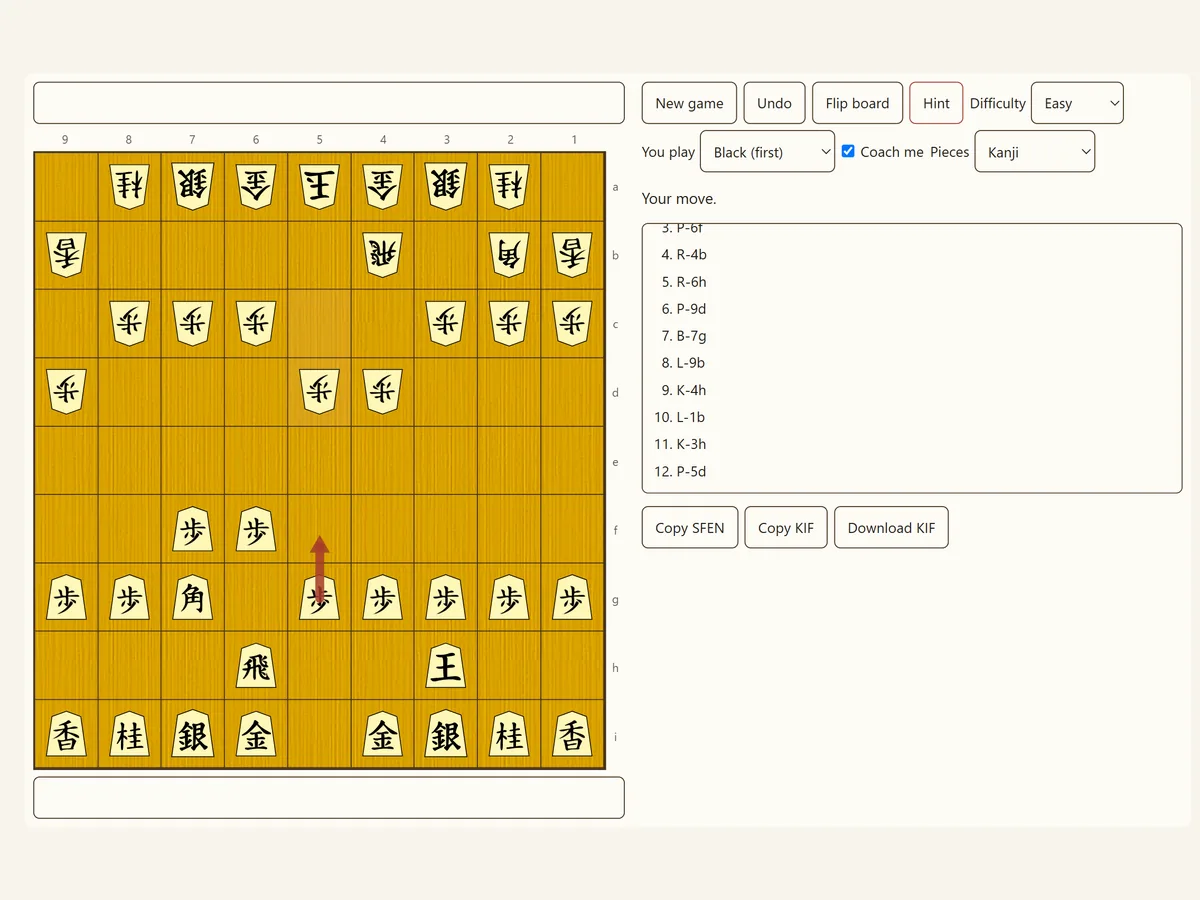
Openings stick when you close the loop: read an idea, play it, see where it breaks, read again. Play against the computer and rehearse your chosen family until the castle builds itself; use the hint button when you’re lost mid-opening, and check the how to play guide if terms here are new. When your games keep ending in mating attacks you didn’t see coming, that’s not an opening problem; that’s tsume practice calling. For the principles that apply after the opening, see shogi strategy and tactics.
FAQ
What are the main openings in shogi?
All mainstream shogi openings belong to two families defined by rook placement. Static Rook (ibisha) keeps the rook on its home file and attacks directly. Ranging Rook (furibisha) moves the rook toward the center or left and counterattacks from behind a quick Mino castle. Named openings are variations within these families.
What is the best shogi opening for beginners?
Most teachers recommend either Ranging Rook with a Mino castle, which builds the same fast, sturdy castle every game, or a simple Static Rook with a climbing silver attack, which teaches attacking fundamentals. Consistency matters more than choice: playing one opening repeatedly beats sampling many.
Do shogi openings have names like chess openings?
Yes, though they’re named by structure rather than by move sequence: Fourth File Rook, Central Rook, Opposing Rook, Double Static Rook, and so on, plus castle names like Yagura, Mino, and Anaguma. Because plans matter more than exact move orders, shogi opening names describe formations.
How long is the opening phase in shogi?
Roughly the first 15 to 25 moves per player, the time it takes both sides to castle their kings, position their rooks, and develop attacking pieces. The middlegame typically begins when the first pawn trades open a file. Rushing this phase before castling is the most punished beginner mistake.
Opening guides
Static Rook
The rook stays on its starting file and attacks straight ahead. The line shown is the Double Wing Attack, where both players race their rook pawns up the board and exchange them.
Ranging Rook
The rook swings sideways to a central file, here the fourth file from the left (Fourth File Rook), while the king castles on the opposite wing behind a Mino castle.
More opening guides are on the way, covering the named systems inside each family. The two family pages above are the right place to start: every mainstream shogi opening lives inside one of them.